
Inverted nipples are more common than many realize, affecting both men and women. While for some, this condition is purely cosmetic, for others it can cause discomfort, hygiene concerns, breastfeeding challenges, or even impact self-confidence. Fortunately, Inverted Nipple Surgery provides an effective solution. This blog takes you through everything you need to know—from diagnosis to recovery—so you can make an informed decision about the procedure.
What Are Inverted Nipples?
An inverted nipple is one that does not project outward and instead retracts into the breast. It can be present from birth or develop later due to aging, trauma, or medical conditions. In some cases, nipple inversion may be a symptom of underlying breast diseases, making it essential to seek medical consultation.
Doctors typically classify inverted nipples into three grades:
Grade 1 – Nipples can be pulled outward easily and usually remain projected.
Grade 2 – Nipples can be pulled outward but tend to retract back
Grade 3 – Nipples remain completely inverted and are difficult to pull outward.
Understanding the severity helps determine whether Inverted Nipple Surgery is the best course of treatment.
Why Consider Inverted Nipple Surgery?
Why Consider Inverted Nipple Surgery?
While nipple inversion is not always harmful, many people choose surgery for reasons such as:
Aesthetic concerns: To restore natural nipple projection.
Breastfeeding challenges: Severe inversion can make latching difficult.
Self-esteem: Enhances body confidence and overall appearance.
Medical necessity: To address underlying conditions in rare cases.
The Surgical Procedure
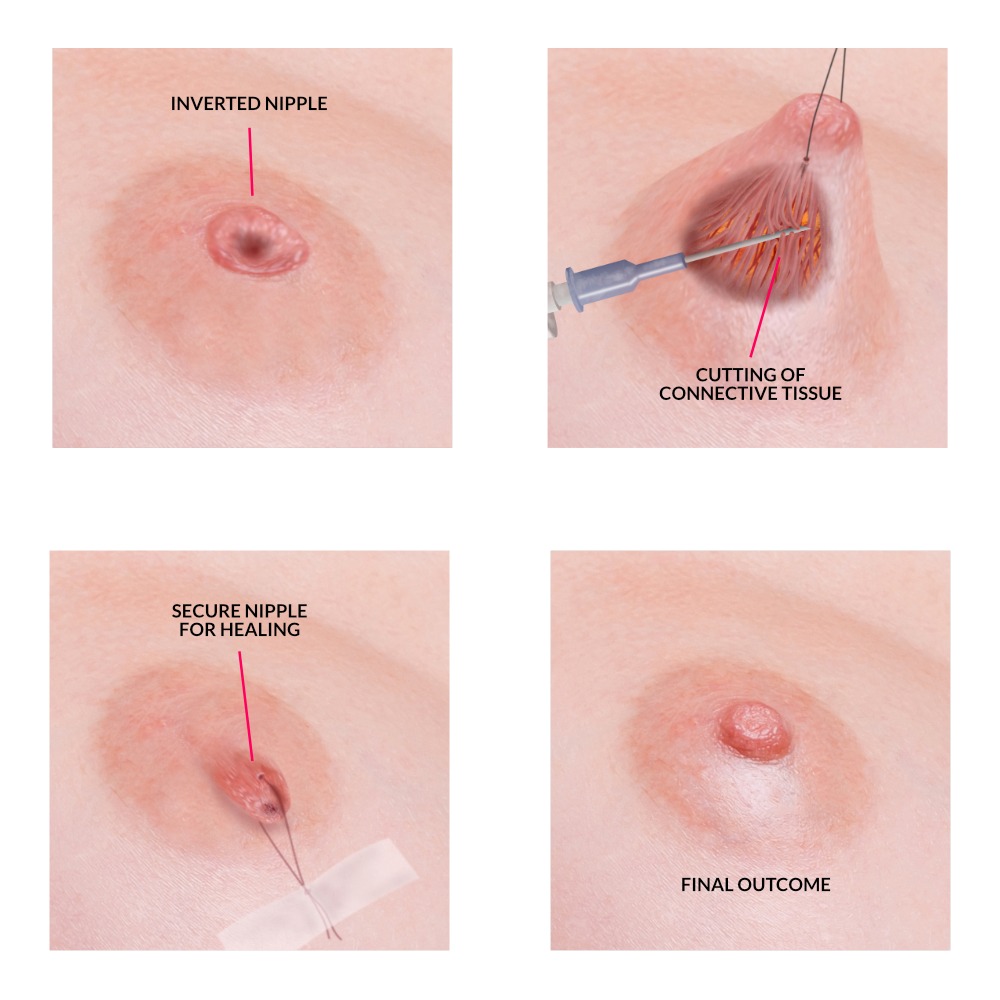
Inverted Nipple Surgery is typically a short outpatient procedure performed under local or general anesthesia, depending on the complexity. The surgical technique varies based on the grade of inversion:
- Simple release technique: Involves loosening tight tissue beneath the nipple.
- Preservation method: Ensures milk ducts remain intact for women planning to breastfeed.
- Permanent correction technique: Suitable for severe cases, focusing on long-term projection.
The entire procedure usually takes 30–60 minutes, and patients can return home the same day.
Recovery Process
Recovery after Inverted Nipple Surgery is generally smooth and quick. Here’s what to expect:
Mild discomfort and swelling: Manageable with prescribed medication.
Dressings or support: The nipples may be protected with dressings for a few days.
Back to work: Most patients resume work within 2–3 days.
Healing period: Swelling subsides in 1–2 weeks, with final results visible in a few months.
Doctors advise avoiding strenuous activities, pressure on the chest, and certain clothing during the healing phase.
Risks and Considerations
Like any surgery, Inverted Nipple Surgery carries some risks, including:
- Infection
- Scarring
- Loss of nipple sensitivity
- In rare cases, recurrence of inversion
However, choosing an experienced plastic surgeon significantly minimizes these risks and ensures optimal results.
Choosing the Right Surgeon
When considering Inverted Nipple Surgery, it’s important to consult a qualified and experienced surgeon who specializes in breast procedures. Look for:
- Board certification in plastic surgery
- A portfolio of successful results
- Patient reviews and testimonials
- A personalized consultation approach
If you are looking for an experienced Plastic Surgeon in Meerut, you can explore trusted specialists who provide customized treatments tailored to your needs.
Final Thoughts
Inverted Nipple Surgery is a safe and effective way to correct nipple inversion, restore confidence, and in many cases, improve functionality. From diagnosis to recovery, understanding the process helps patients feel prepared and reassured.
If you are considering this procedure, schedule a consultation with a skilled surgeon to discuss your expectations, explore surgical options, and take the first step toward regaining your confidence.
FAQs:
The procedure itself is performed under anesthesia, so you won’t feel pain during surgery. Afterward, mild discomfort or swelling may occur, but this is temporary and manageable with prescribed medication.
It depends on the surgical technique used. In cases where milk ducts are preserved, many women can still breastfeed. If breastfeeding is a concern, discuss this with your surgeon before the procedure.
Results are generally permanent, especially for moderate to severe cases. However, in a small number of patients, nipples may reinvert over time. Following post-surgery care and choosing an experienced surgeon helps minimize this risk.






Leave a comment