Closed Rhinoplasty Recovery Timeline: Swelling, Healing and Results
Home/Uncategorized/Closed Rhinoplasty Recovery Timeline: Swelling, Healing and Results
September 11, 2026
0
Closed Rhinoplasty Recovery Timeline: Swelling, Healing and Results
If you are planning nose surgery, understanding the Closed Rhinoplasty Recovery Timeline: Swelling, Healing and Results can help you know what to expect after the procedure. Closed rhinoplasty is performed through incisions made inside the nostrils, so there are no external cuts on the nose.
However, like any surgical procedure, it requires proper healing, patience and post-operative care. Swelling and mild discomfort are common during the early recovery period, while the final shape of the nose may take several months to become visible.
What Is Closed Rhinoplasty?
Closed rhinoplasty is a surgical technique used to reshape or improve the appearance and function of the nose. In this approach, the surgeon makes all necessary incisions inside the nostrils. Unlike open rhinoplasty, there is no external incision across the columella, which is the tissue between the nostrils.
The technique may be suitable for selected patients who require changes to the nasal bridge, tip or overall nasal structure. The exact procedure depends on the patient’s nasal anatomy, concerns and treatment goals.
Closed Rhinoplasty Recovery Timeline: What to Expect
Recovery is different for every patient. Some people experience more swelling or bruising than others. Your surgeon’s instructions should always take priority because they are based on your individual procedure.
First 24 to 48 Hours After Nose Surgery
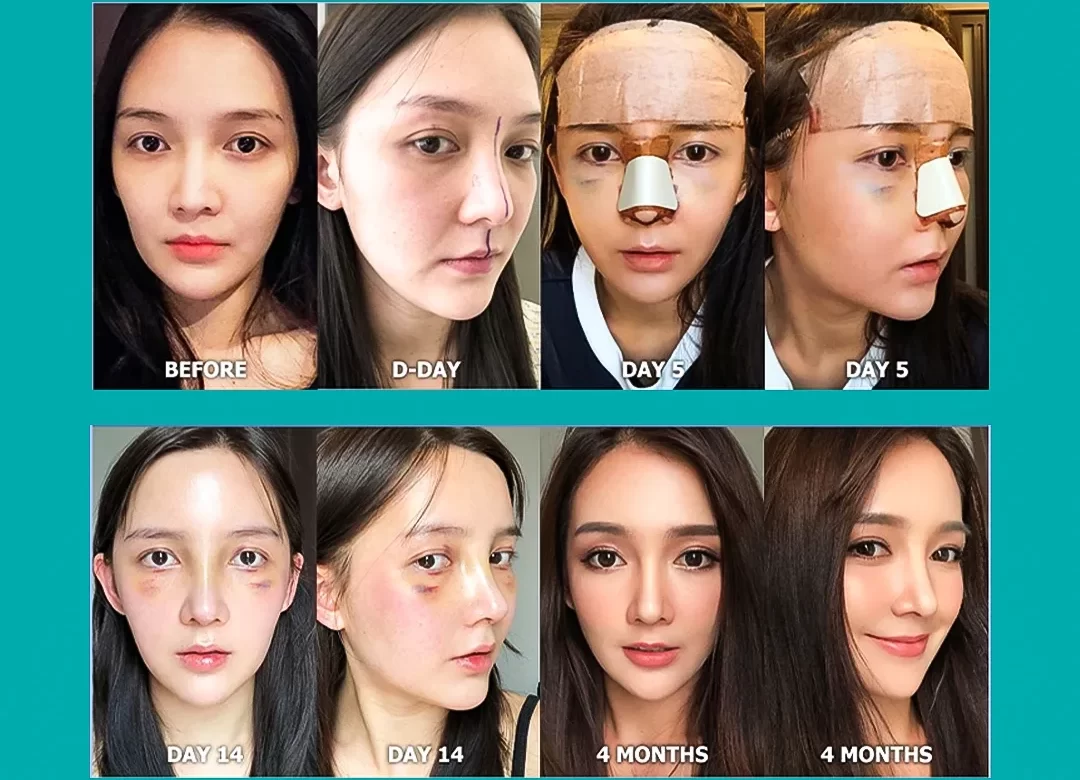
The first two days are generally focused on rest and controlling swelling. You may experience nasal congestion, mild discomfort, swelling around the nose and bruising under the eyes.
Keeping your head elevated while sleeping can help reduce swelling. Cold compresses may also be recommended around the cheeks and under-eye area, but they should not be placed directly on the nose unless advised by your surgeon.
It is normal to feel tired during this stage. Avoid unnecessary physical activity and follow all prescribed medicines and care instructions.
First Week: Swelling and Bruising
During the first week, swelling and bruising are usually more noticeable. Some patients may have a nasal splint or dressing, depending on the surgical technique.
You may be advised to avoid blowing your nose, bending forward, lifting heavy objects and doing strenuous exercise. Sneezing with your mouth open may also be recommended to reduce pressure inside the nose.
By the end of the first week, the surgeon may remove the splint if one was used. Although the nose may already look different, it is too early to judge the final result.
Week 2 to Week 4: Early Healing
During the second to fourth week, most visible bruising gradually improves. Facial swelling also starts reducing, and many patients feel more comfortable returning to their normal daily routine.
However, the nose can still appear swollen, particularly around the tip. Nasal congestion may also continue for some time.
Light activities can generally be resumed according to your surgeon’s advice, but strenuous workouts and activities that could cause an injury to the nose should be avoided until you receive medical clearance.



Leave a comment