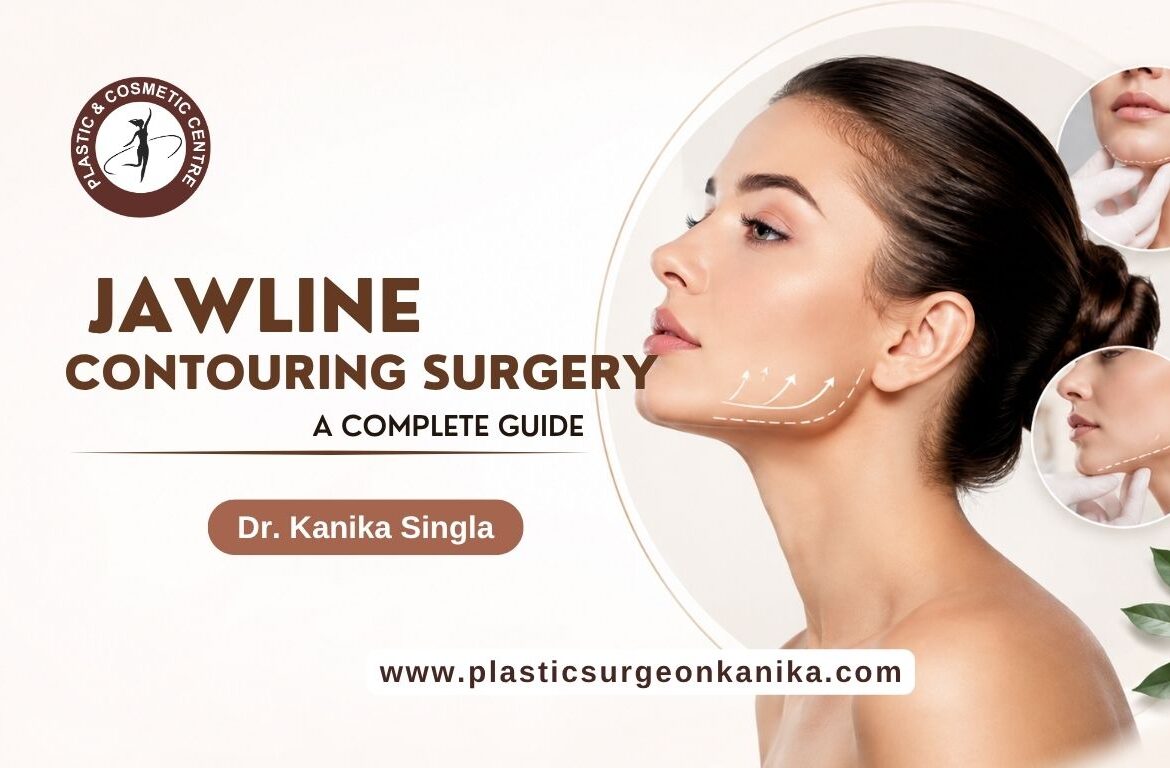
A well-defined jawline can significantly influence the overall appearance and balance of the face. However, factors such as genetics, aging, excess facial fat, skin laxity, or the natural shape of the jawbone can make the jawline appear less defined. Jawline contouring surgery is a cosmetic procedure designed to improve the shape and definition of the lower face according to an individual’s facial structure and aesthetic goals.
If you are considering facial contouring, consultation with an experienced specialist is important to understand which approach is appropriate for you. You can consult a Plastic Surgeon in Meerut, Dr. Kanika Singla for a personalized evaluation.
What Is Jawline Contouring Surgery?
Jawline contouring refers to surgical techniques used to reshape or define the jawline and lower face. Depending on the patient’s anatomy and desired result, treatment may involve addressing excess fat, soft tissue, the chin, or the underlying jaw structure.
It is important to distinguish cosmetic jawline contouring from orthognathic (corrective) jaw surgery, which is performed primarily to correct jaw misalignment and functional problems such as certain bite abnormalities.
The appropriate procedure depends on factors such as facial proportions, bone structure, skin quality, and the amount of soft tissue around the jaw.
Who May Consider Jawline Contouring?
Jawline contouring may be considered by adults who are generally healthy and have realistic expectations about cosmetic surgery. It may be suitable for people concerned about:
- A poorly defined or broad jawline
- Excess fat around the lower face or jaw
- A lack of facial definition
- Mild skin laxity affecting the jawline
- Facial proportions that they would like to improve
- An appearance of a fuller lower face
A consultation is essential because not every concern requires surgery. Your surgeon can assess your facial anatomy and discuss whether surgical or non-surgical treatment is more appropriate.
How Is Jawline Contouring Performed?
There is no single technique that works for everyone. Treatment is customized according to the underlying cause of an undefined jawline.
For some patients, reducing excess soft tissue or facial fat may help create a sharper transition between the face and neck. In others, the chin or jaw structure may need to be addressed to improve overall facial proportions.
When structural jaw surgery is required, imaging and detailed surgical planning may be necessary. Corrective jaw surgery is a more complex procedure and may involve the upper jaw, lower jaw, or both.
Your surgeon will discuss the recommended technique, anesthesia, expected outcome, and potential risks during your consultation.
Benefits of Jawline Contouring
The potential benefits of appropriately selected jawline contouring can include:
- Better definition of the jawline
- Improved facial proportions
- A more sculpted lower face
- Improved transition between the jaw and neck
- Greater facial symmetry
- Long-lasting structural changes in appropriately selected surgical procedures
The goal should be a natural-looking result that complements the rest of the face rather than creating an overly sharp or artificial appearance.
Recovery After Jawline Contouring
Recovery varies depending on the specific procedure performed. Swelling and bruising are common after facial and jaw procedures. Following corrective jaw surgery, swelling can increase during the first few days and gradually decrease over the following weeks, while subtle swelling may persist for longer.
Your surgeon may provide instructions regarding medications, wound care, sleeping position, diet, physical activity, and follow-up appointments. Following these instructions carefully can support healing and help reduce complications.
You should not judge the final appearance immediately after surgery because swelling can temporarily change facial contours.
Is Jawline Contouring Surgery Safe?
Like any surgical procedure, jawline contouring has potential risks. Depending on the technique, these may include bleeding, infection, swelling, numbness or changes in sensation, scarring, anesthesia-related complications, asymmetry, and the possibility of requiring revision surgery. More extensive jaw surgery may carry additional risks, including problems related to bone healing or jaw function.
Choosing a qualified and experienced plastic surgeon and following pre- and post-operative instructions are important parts of surgical safety.
Final Thoughts
Jawline contouring surgery can be an option for people who want to improve lower-face definition and facial proportions. Because jawline concerns can result from different anatomical factors, treatment should always be customized rather than based on a one-size-fits-all approach.
If you are considering jawline contouring in Meerut, discuss your goals and concerns with a qualified plastic surgeon to determine the safest and most suitable approach for your facial anatomy.
FAQs:
Jawline contouring surgery involves procedures designed to improve the shape, definition, or proportions of the jawline and lower face.
No. Cosmetic jawline contouring focuses primarily on facial appearance, while corrective jaw surgery may be performed to address jaw misalignment and functional problems.
Recovery depends on the procedure performed. Swelling and bruising are common, and the final facial contour may become clearer gradually as swelling subsides.
Structural changes made during surgery can be long-lasting, although the face naturally changes with aging and other factors over time.





Leave a comment